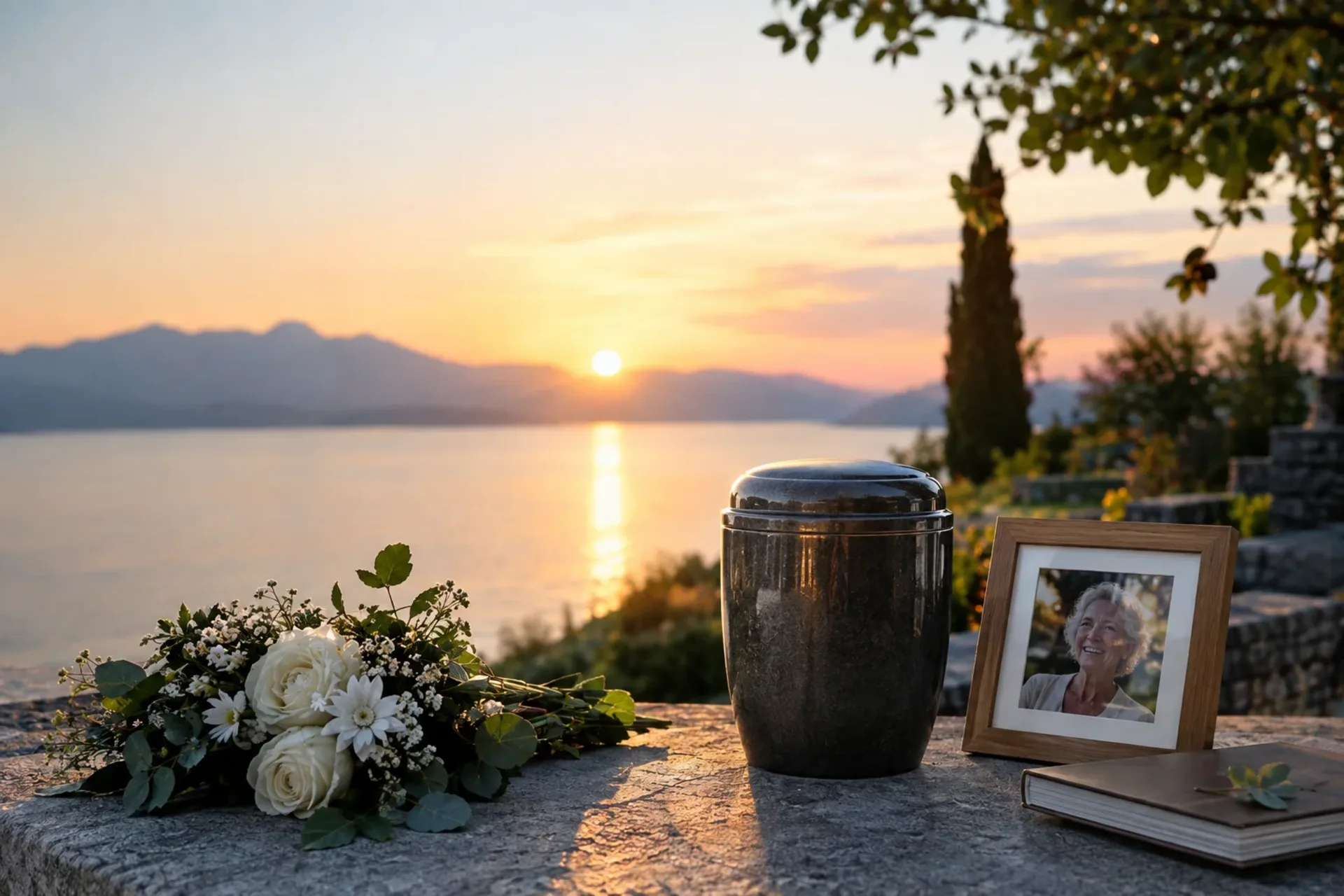
After the death of a loved one, the question of where one can come to pay one’s respects sometimes takes on an importance that had not been anticipated.
In the case of an inhumation, the grave often becomes this landmark. After a cremation, the relationship to place can be different, especially when the ashes are not associated with a family grave.
But in both situations, the same question remains: where can one find the memories, photographs and story of the person who has passed when one wishes to think of them or introduce them to future generations?
The online memorial provides a complementary answer to traditional places of reflection. It does not replace a grave, a columbarium, or a symbolic place. It creates an additional space: that of memory and transmission.
Cremation or Inhumation: Two Different Ways of Considering the Place of Memory
The choice between inhumation and cremation depends on the wishes of the deceased person, their beliefs and, when their wishes are unknown, the decisions made by their loved ones within the framework provided by regulations.
These two choices can nevertheless create different relationships to the place of reflection.
After an Inhumation: the Grave as a Point of Reference
When a person is buried, the grave generally constitutes a clearly identified place.
Loved ones can go there to lay flowers, tend the grave, pay their respects or simply spend a few moments in silence.
Over time, this place sometimes becomes a family landmark. Children and grandchildren know where the person they are told about rests.
Yet a grave necessarily tells little about the life that preceded it: a name, dates, sometimes a photograph, an epitaph or a few symbols.
Behind these few elements lie dozens of years of memories, faces, travels, passions and family stories.
After a Cremation: Reflection Can Take Other Forms
After a cremation, a physical place of reflection can also exist, for example when an urn is placed in a grave or a columbarium.
In other situations permitted by regulations, the relationship to place can be different. Some families then feel the need to create their own symbolic landmarks.
This may be a place the deceased person loved, a family space, an object kept at home or simply a particular moment during which one thinks of them.
There is not only one way to pay one’s respects.
Paying One’s Respects Does Not Only Mean Going to a Place
Reflection is often associated with a physical location. Yet, the memory of a person also manifests itself in many moments of everyday life.
A photograph found again. A song heard by chance. A recipe. A family expression. A video. A story told once more during a meal.
The memory of a person is therefore not limited to the place where their coffin or ashes rest.
It continues to live in the memories of those who knew them.
This is precisely where the digital can play an interesting role: not to replace the physical place, but to bring together what tells the life of the person.
What Is an Online Memorial?
An online memorial is a digital space dedicated to a person who has passed away.
Unlike a simple death notice, it is designed to preserve and transmit their story over time.
An online memorial can notably bring together:
- a biography or the story of their life;
- photographs from different periods;
- videos;
- family anecdotes;
- testimonies from loved ones;
- passions and important moments of their journey.
All these traces, usually scattered between albums, phones and different family members, can thus be gathered in the same space.
Why Is an Online Memorial Particularly Useful After a Cremation?
After a cremation, some families have a clearly identified physical place to pay their respects. Others do not.
In the latter case, a digital memorial can offer a common point of reference that does not depend on a single geographical location.
A child living in Lille, a brother settled in Marseille and a grandchild living abroad can thus access the same space dedicated to their loved one.
This does not turn the digital memorial into a substitute for a physical place. It simply meets another need: being able to find the story and memories of the person when one feels the desire to do so.
And After an Inhumation, What Is the Point If a Grave Already Exists?
The online memorial is also useful when a person has been buried.
In this case, the digital and the grave can become complementary.
The grave remains the physical place of reflection. The memorial becomes the space in which the story can continue to be told.
A small plaque with a QR code can, when its installation is possible, link the two.
A person who visits the grave can scan the QR code with their smartphone and access the memorial dedicated to the deceased.
Behind a name engraved in stone appear a face, photographs, memories and the story of a life.
A Memorial Accessible Even When the Family Lives Far Away
Families today sometimes live hundreds or thousands of kilometres apart.
Not everyone can visit a cemetery regularly, a columbarium or another place of memory.
This geographical distance does not mean that the need to remember disappears.
An online memorial allows access to memories from a phone, a tablet or a computer, wherever one is.
This can be particularly important for children and grandchildren who live far from the place where their loved ones rest.
Passing on to Generations Who Did Not Know the Person
With the years comes another question, perhaps even more important: how to pass on the memory to those who were not there?
A child may know their grandfather. Their own child may never have met them.
What will remain then?
A few photographs whose date is not always known. A first name. Stories told from memory. Sometimes a box of archives that no one opens anymore.
A family memorial makes it possible to give context to these memories.
A photograph is no longer simply an image: it can be accompanied by a story explaining where it was taken and who the people present are.
A video allows one to rediscover a voice, a way of speaking or a smile.
An anecdote told by a loved one can continue to be read several generations later.
Memoraluna: Creating a Shared Place for Memories
It is in this idea of transmission that Memoraluna is rooted.
Memoraluna allows the creation of a family online memorial dedicated to a person who has passed away and the gradual gathering of their story, their photographs, their videos and the memories of those who knew them.
The objective is not to replace traditional places of reflection.
A grave remains a grave. A columbarium remains an important physical place for many families. And some loved ones will always prefer a particular place, a photograph or an object to think of the person who has passed.
The memorial simply adds another dimension: that of the life one wishes to continue telling.
With or Without a QR Code Plaque
When the deceased is buried and the applicable rules permit it, the Memoraluna memorial can be associated with a QR code plaque placed on the grave.
The QR code then becomes a discreet link between the physical monument and the digital memory.
But the online memorial retains its full meaning when there is no grave on which to install a plaque.
After a cremation, it can be shared directly with family members and loved ones.
The essential thing is therefore not the QR code itself. The essential thing is the memorial space to which it can give access.
A Space That Can Continue to Grow Over Time
Family memory is never truly finished at the time of the funeral.
Photographs are found several months later. A cousin tells an anecdote unknown to the grandchildren. An old video reappears on a phone.
A digital memorial can accompany this memory over time by allowing the gradual gathering of these elements.
This is an important difference from an inscription engraved in stone: the story can continue to be enriched as memories reappear.
Grave, Symbolic Place or Digital Memorial: Do We Really Have to Choose?
These different forms of reflection are not necessarily in competition.
They can meet different needs.
- The grave offers a physical place to go to.
- A symbolic place can have a particular intimate meaning for the family.
- The online memorial makes it possible to gather and transmit the story, the photographs and the memories.
The same family can therefore use several of these forms of memory.
Because ultimately, the most important thing is perhaps not to determine where the memory should live.
It is to ensure that the stories, faces and moments that mattered do not disappear with time.
Frequently Asked Questions About Reflection After a Cremation or Inhumation
Where to Pay One’s Respects After a Cremation?
It depends on the destination of the ashes and the family’s choices. When an urn is placed in a grave or a columbarium, the latter can constitute a place of reflection. Other families also maintain a connection with a symbolic place that was important to the deceased. An online memorial can complement these landmarks by giving access to their memories independently of where the loved ones are.
Can One Create an Online Memorial After a Cremation?
Yes. Creating an online memorial does not depend on the existence of a grave. It can be dedicated to a person who was buried or cremated and shared directly with their loved ones.
Does an Online Memorial Replace a Grave?
No. A grave is a physical place of reflection while an online memorial mainly allows one to preserve and transmit photographs, videos, testimonies and the story of a person. The two can be complementary.
What Is the Purpose of a QR Code on a Grave?
A QR code placed on a grave can allow access from a smartphone to the person’s online memorial. It thus creates a link between the physical place of reflection and the digital memories gathered by the family.
Can One Have an Online Memorial Without a QR Code Plaque?
Yes. The memorial can exist and be consulted independently of a QR code plaque. Its address can notably be shared directly with family members and loved ones.
What Can Be Placed in an Online Memorial?
A memorial can bring together different elements telling the person’s story: their history, photographs, videos, anecdotes and testimonies from their loved ones. The objective is to preserve not only their identity, but also what made their life unique.
Remembering a Place, but Above All a Life
Cremation or inhumation, each family gradually builds its own way of remembering.
Some will need to go to a specific place. Others will open an album, listen to a song or tell an anecdote.
The digital today offers an additional possibility: to gather these fragments so that they remain accessible to loved ones and can be passed on.
With Memoraluna, the online memorial thus becomes less a place dedicated to absence than a space dedicated to the life whose trace one wishes to preserve.