
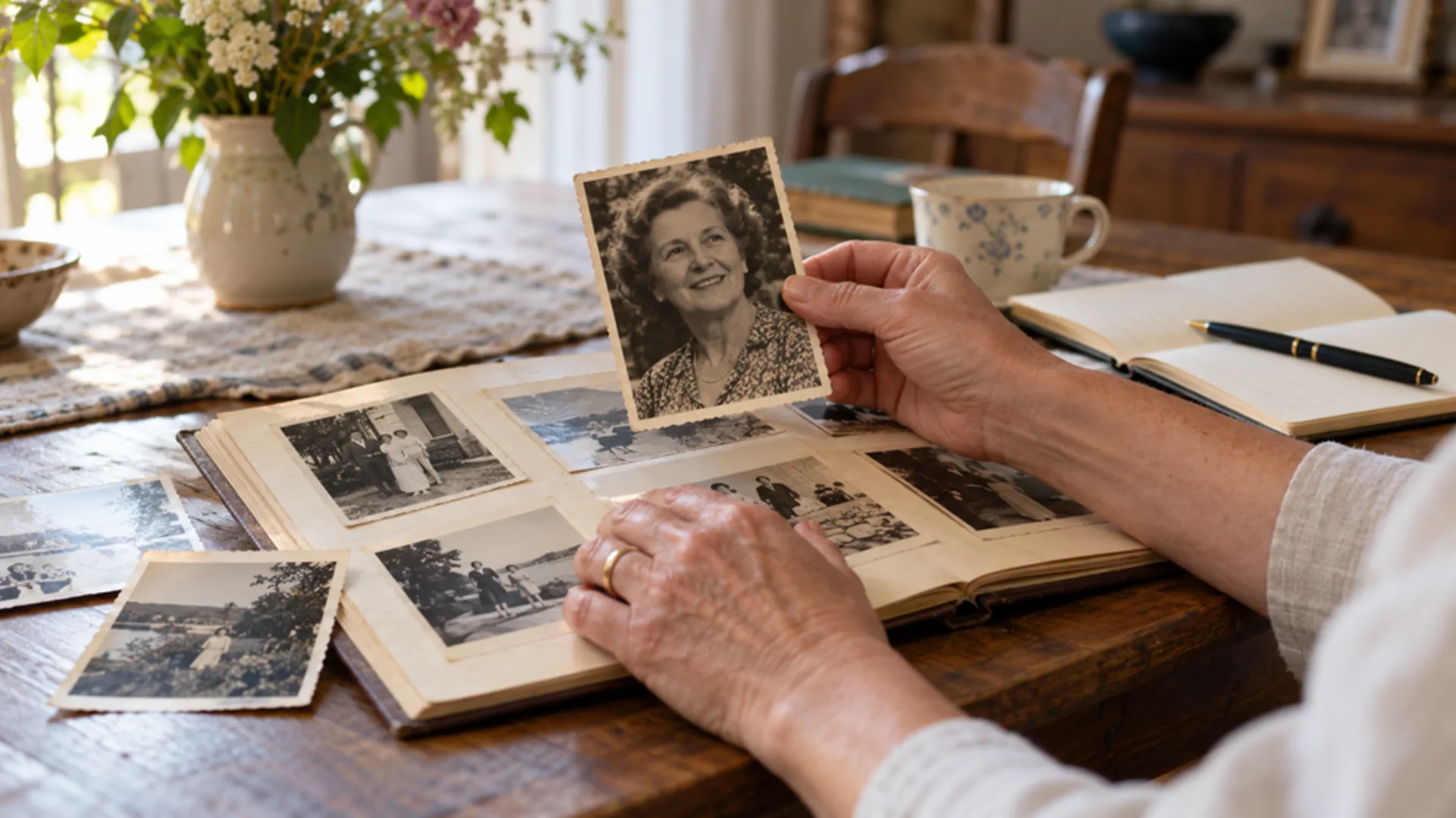
To write the biography of a deceased loved one, gather the milestones of their life, collect testimonies, choose a few anecdotes and organize the story into major stages. Then reread the text with the family before deciding how to preserve and share it.
Why tell the story of a loved one after their death?
A commemorative biography recounts a journey, a personality and the bonds formed over the years. It can complement a funeral tribute by giving more space to everyday memories. It answers a simple question: what do we wish to pass on about this person?
For a child who barely knew their grandfather, an anecdote can make their story concrete. For siblings, gathering several memories allows discovering different facets of the same parent. An online memorial Memoraluna can host this story with photos and testimonies.
How to write a biography in five steps?
1. Gather milestones and documents
Start with a list: places of residence, childhood, education, professions, encounters, commitments and passions. Consult albums, letters and available family documents. Note the source of the information so it can be verified.
Don’t know a date? Prefer a clearly indicated approximate period over an invented precision. The goal is to build a faithful story, even if incomplete.
2. Collect memories from several relatives
Ask each person to recount a specific scene. “What shared moment comes to mind first?” often opens the conversation more than “What can you say about their life?”. A few questions can help:
- What habit or phrase characterized them?
- What did they like to pass on, make or teach?
- What gesture revealed their way of caring for others?
Respect everyone’s pace. If two accounts differ, present them as personal memories rather than arbitrarily choosing one version.
3. Choose an easy-to-follow structure
A chronological structure is a good starting point. You can organize the biography around five parts:
- The origins: their birth, childhood and environment.
- The path traveled: their education, professions and choices.
- The bonds: their family, friendships and encounters.
- The personality: their passions, habits and convictions.
- The transmission: the memories and values they leave behind.
Adapt this framework to their story. A musical passion or associative commitment can serve as a guiding thread.
4. Bring the story to life with concrete details
Simple sentences are enough. Instead of writing only “she was generous”, recount the meals she prepared for the neighbors. A true detail helps the reader imagine the person.
You don’t need to tell everything or idealize their journey. Choose what illuminates their life with respect. Intimate episodes can remain within the family circle.
5. Reread, verify and complete progressively
Read the text aloud, then have it checked by a relative. Correct names and dates, remove repetitions and verify that quotations match the words actually spoken.
Keep a copy of the story and the original documents. A first version can be short: you can enrich it when a photograph or new testimony reappears.
Example of the beginning of a biography of a deceased loved one
Here is a fictional example to adapt to your family story:
Madeleine grew up in a village where everyone knew her family. From this childhood, she had kept a taste for gardens and long conversations. As a seamstress, she liked to repair what others thought was lost. Her grandchildren especially remember the button drawer, the impromptu snacks and her patience when she taught them to sew a pocket.
This beginning combines a few milestones with a familiar scene. The rest can develop her journey, her encounters and the memories shared by her relatives.
How to share this memory with the family?
Accompany the biography with captioned photographs: who appears, where and at what period? These indications will help readers who do not recognize the faces. Also ask contributors for their consent before publishing their texts or images.
On Memoraluna, the family chooses the access conditions for the memorial and validates contributions before publication. It can thus pass on the story while preserving its privacy.
A QR code plaque allows opening the memorial from a smartphone. The story remains editable without replacing the plaque. The guide how the memorial with QR code works presents the steps for creation, consultation and installation.
Give memories a place with the Memoraluna pack
For 89 € TTC excluding delivery, the Memoraluna pack includes two QR code plaques and twenty years of hosting the digital memorial, with no subscription. It offers a shared space to find the biography, photographs and family memories, even when relatives live far apart.
You can start with a portrait, a few lines and an anecdote, then complete the story at your own pace. Discover everything included with the commemorative QR code plaque and the Memoraluna pack, then order your pack to give these memories a place.
Your first memory can become the beginning of a shared story.
Frequently asked questions about the biography of a deceased loved one
How to start if I can’t find the words?
Choose a photo and describe the memory it evokes. Note three details: a place, a gesture, a word. This first paragraph can serve as a starting point.
What length should I plan for a commemorative biography?
There is no mandatory length. A few paragraphs can suffice to begin. Favor a readable story, structured in sections if you wish to recount more memories.
Can a biography be written by several people?
Yes. Designate one person to gather contributions and harmonize the text. Then have the common version reread by the participants before publication.