
A child sometimes knows their grandfather’s first name without knowing what made him laugh. They recognize his face in a photo but ignore the stories adults associate with that smile. Telling these details gives them an opportunity to discover the person behind the portrait.
All Saints’ Day can provide a moment to open this conversation, simply, without trying to tell everything at once.
Why take advantage of All Saints’ Day to share memories?
In the Catholic tradition, All Saints’ Day on November 1 celebrates all saints, while the commemoration of the deceased takes place on November 2.
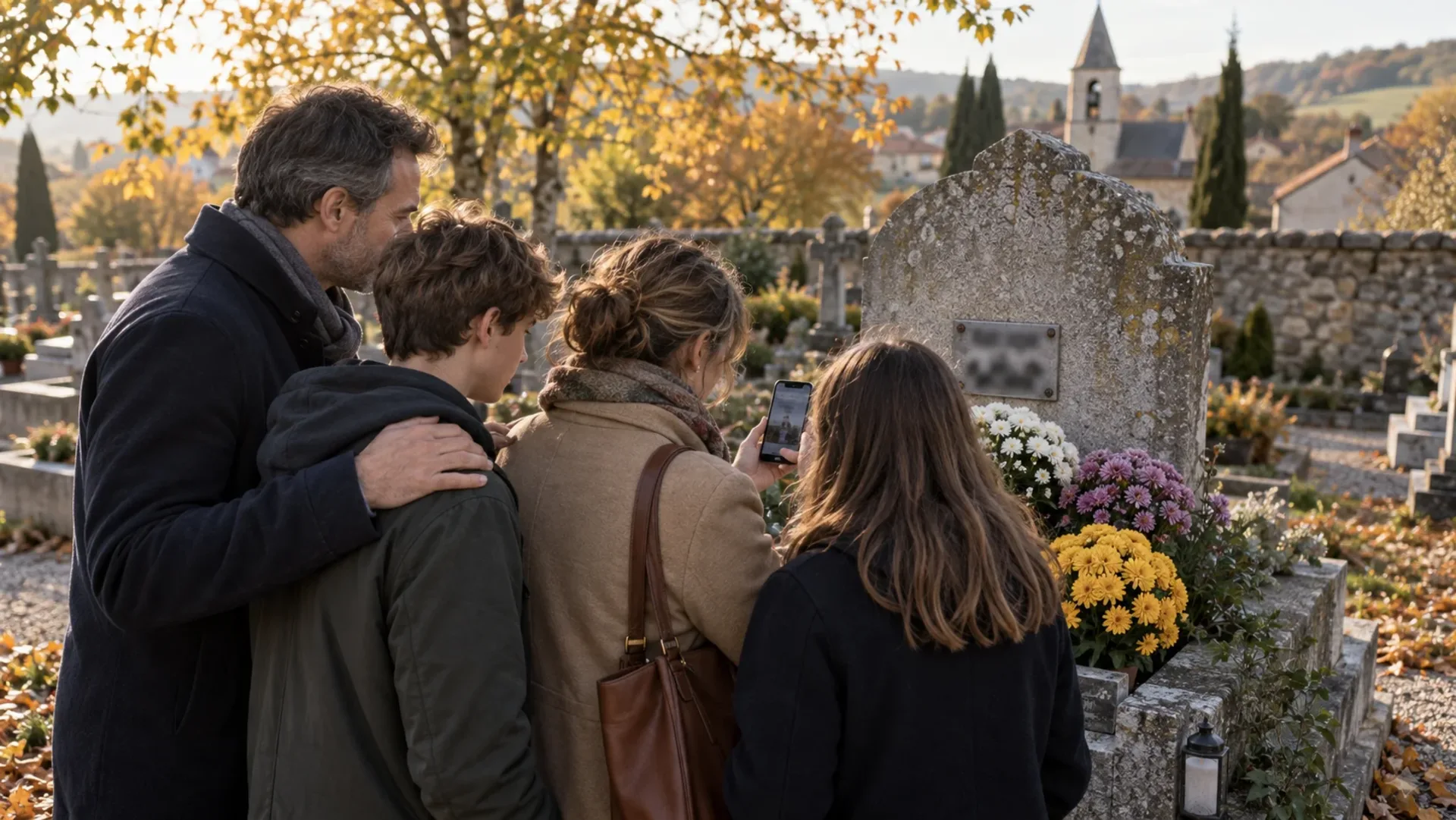
For families who gather during this period, a visit to the cemetery can also become a time of transmission. People bring flowers, recall a memory, then a question opens the discussion: “What was Grandpa like when you were little?”
You can welcome this curiosity without preparing a long speech. A short story, told in your own words, already constitutes a starting point.
1. Choose a few photos that really tell a story
To begin, select three to five photographs showing different moments: a meal, a vacation, an activity or a family gathering. Prioritize images to which you can attach a small story.
Instead of presenting only the people and dates, describe what was happening: “That day, Grandma had baked her apple pie. We all wanted to help her.”
Then let the child observe and ask questions. A piece of clothing, a landscape or an object may catch their attention. You can note a short caption together under each image to preserve the context and identify the people shown.
2. Tell habits and small everyday anecdotes
To honor a loved one at All Saints’ Day, also think of ordinary memories. A favorite expression, a way of cooking or a hummed song convey a presence in a very personal way.
Choose a precise anecdote rather than a long list of qualities. Saying “he was generous” takes on another dimension when you recount how he brought vegetables to his neighbors every week.
You can ask the child: “What moment comes to mind when you think of her?” If they did not know the person, share your own memory without expecting them to feel the same as you.
3. Gather several voices in the family
Memories of a loved one vary according to relationships and eras. Their children can recount their life as a parent, their siblings their childhood, and their friends moments the family does not know.
Invite everyone to contribute with a single photo or a short anecdote. This limited request is easier to approach than a complete account of an entire life.
To organize contributions, note the first name of the person telling the story and, if possible, an approximate date. When two memories differ, keep this nuance. You can write “in the memory of their sister” rather than presenting an uncertain detail as an established fact.
4. Prepare a visit to the cemetery with the children
If you plan to gather as a family, simply explain the planned sequence: you will go to the grave, lay flowers and take a moment to think of the deceased loved one.
Offer the children a small gesture, without obligation: choose a flower color, help carry the bouquet or listen to a story. Also ask if they wish to come and leave room for their questions.
On site, remain flexible. You can tell a memory then leave, or continue the discussion at home. Remembrance can take different forms within the same family.
5. Gather memories in a commemorative space
A digital commemorative space is an online page dedicated to a person’s memory. Depending on the service used, it can present a life story, photographs or testimonies.
Before choosing a solution, prepare the elements you would like to gather: a few images, a short presentation and two or three anecdotes. This initial set is enough to give direction to the project.
Discuss with relatives what can be shared. Some stories belong in a tribute accessible to visitors; others may remain in family albums. Also keep a copy of the texts and photographs in your own archives.
6. Link the place of remembrance to memories with a QR code plaque
A funeral QR code plaque carries a code that opens a link when scanned with a smartphone. It can direct visitors to a commemorative page and extend the discovery of the deceased’s story.
Imagine a mother in front of her father’s grave, accompanied by her children. She looks at a photograph with them and tells the vacation represented in the image. The phone serves here as a support for the family conversation.
Before ordering, check the accepted formats, access settings, any recurring fees and the duration of service availability. Also consult the installation instructions and cemetery guidelines. The QR code links to content whose access depends on the associated service.
7. Keep this transmission alive after All Saints’ Day
Memories can find a place in everyday gestures: preparing a family recipe, leafing through an album or returning to a place the loved one enjoyed.
You can propose a very simple project: ask each family member to choose a photo and write a few lines. Then gather these contributions in an album or suitable digital space.
Return to these stories when the opportunity arises. A child may want to discover a detail today and ask another question later. There is no need to set a schedule or turn every meeting into a commemorative moment.
Frequently asked questions about passing on memories
What to tell a child who did not know their grandparent?
Start with a photo and a concrete anecdote: their profession, a hobby or a happy moment. Explain your connection to this person, then let the child choose the questions they wish to ask.
Do you have to go to the cemetery to pay tribute at All Saints’ Day?
You can also look at photos, share a meal or tell a memory at home. Choose a time and place that suits your family, taking everyone’s wishes into account.
Does a QR code plaque replace a family album?
It can complement an album by providing access to a page of memories from the grave. Features and access conditions vary by service. Keep your original photographs and your own copies of the content.
Prepare a family tribute with Memoraluna
Would you like to discover how a plaque can support your transmission approach? Consult the Memoraluna QR code plaques and the offer information. Before choosing, gather the memories you would like to share: a photograph, a few words and a story that deserves to be told to future generations.